


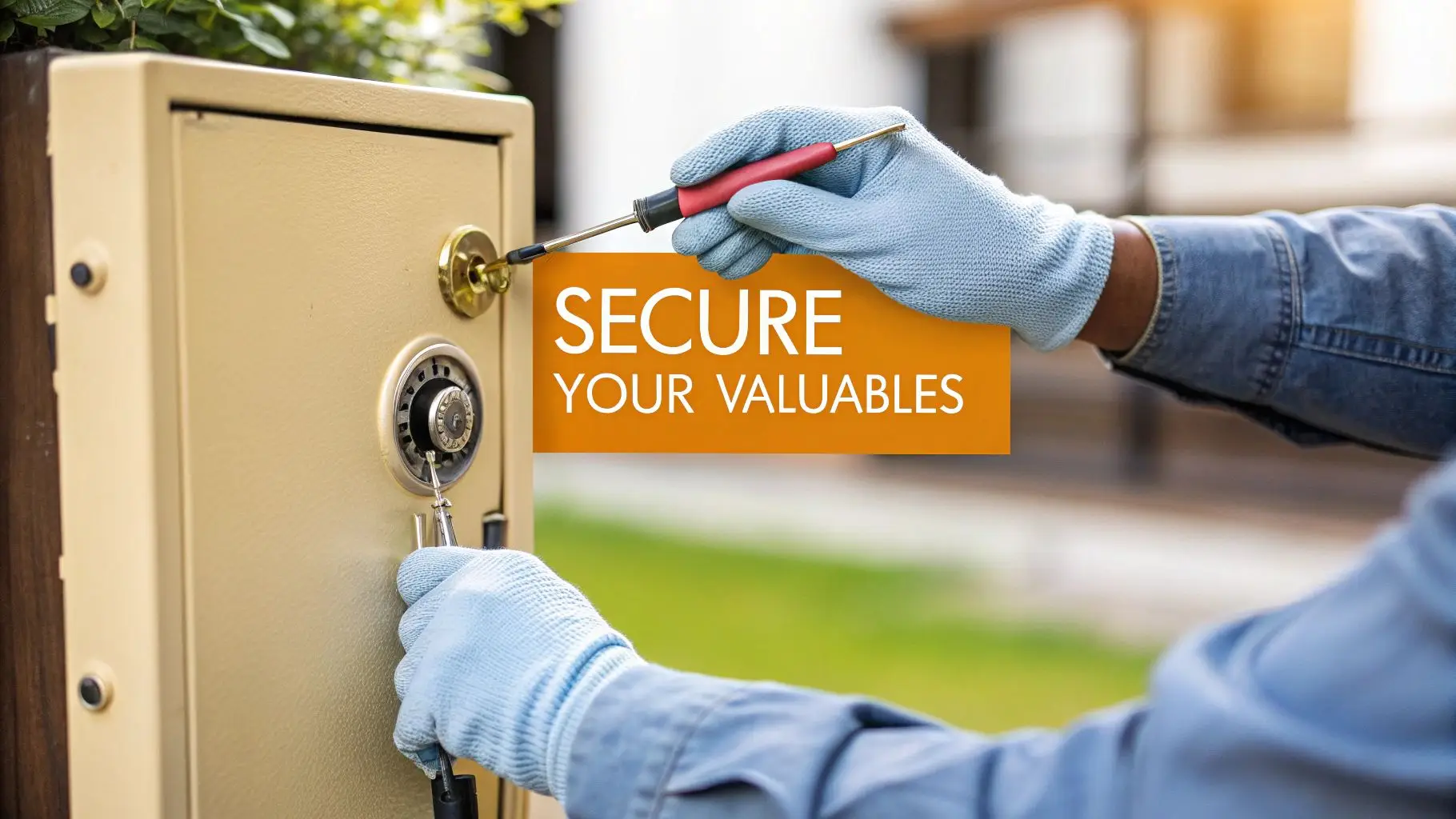
When you can't get into your safe, I know the first instinct is to just find the nearest locksmith and get it open. But hold on—that's a move that can cost you dearly. There's a world of difference between a general locksmith and a true safe technician. It's not just a different job; it's a completely different skillset.
Safe work is a specialized craft, far removed from changing the locks on your front door or getting you back into your car.
Why a Specialist Locksmith for Your Safe Is Non-Negotiable
That gut-wrenching moment when your safe refuses to open calls for a scalpel, not a sledgehammer. And that’s precisely what a certified safe technician brings to the table. The difference between hiring a generalist and a specialist often comes down to one simple thing: keeping your safe or turning it into a very expensive paperweight.
A general locksmith is your go-to for standard house locks, but they're typically out of their depth with high-security containers. A real safe specialist lives and breathes the complex mechanics of boltwork, hair-trigger relocking devices, and the sophisticated locks designed to keep people out. Their job isn't just to open the door; it's to do it with precision and finesse.
The Priority of Non-Destructive Entry
The true mark of a professional safe technician is their unwavering commitment to non-destructive entry. Their first, second, and third plan is always to get that safe open without leaving a scratch.
This isn't just wishful thinking; it's a methodical process that can involve:
- Lock Manipulation: This is the real deal—a technician painstakingly "feels" the lock's internal wheels to find the combination. It's a skill that takes years of practice and incredible patience.
- Scoped Entry: Using high-tech borescopes and other optical tools, they can peek inside the lock mechanism to bypass it cleanly and intelligently.
Drilling is never the first option; it's the absolute last resort. An inexperienced locksmith might reach for a drill or, heaven forbid, a grinder right away. This brute-force approach doesn't just wreck the safe's security; it can instantly void its fire rating, turning a $5,000 asset into scrap metal.
A professional opens a safe with a precisely drilled 1/4-inch hole that they can properly repair afterward. An amateur leaves behind a mess of mangled steel, forcing you to replace the safe and pay for its disposal.
Hiring a specialist isn't just paying for a service—it's an investment in protecting your valuables and the very container they're stored in. Anything less is a gamble you can’t afford to lose.
Your First Step in Vetting GTA Safe Locksmiths
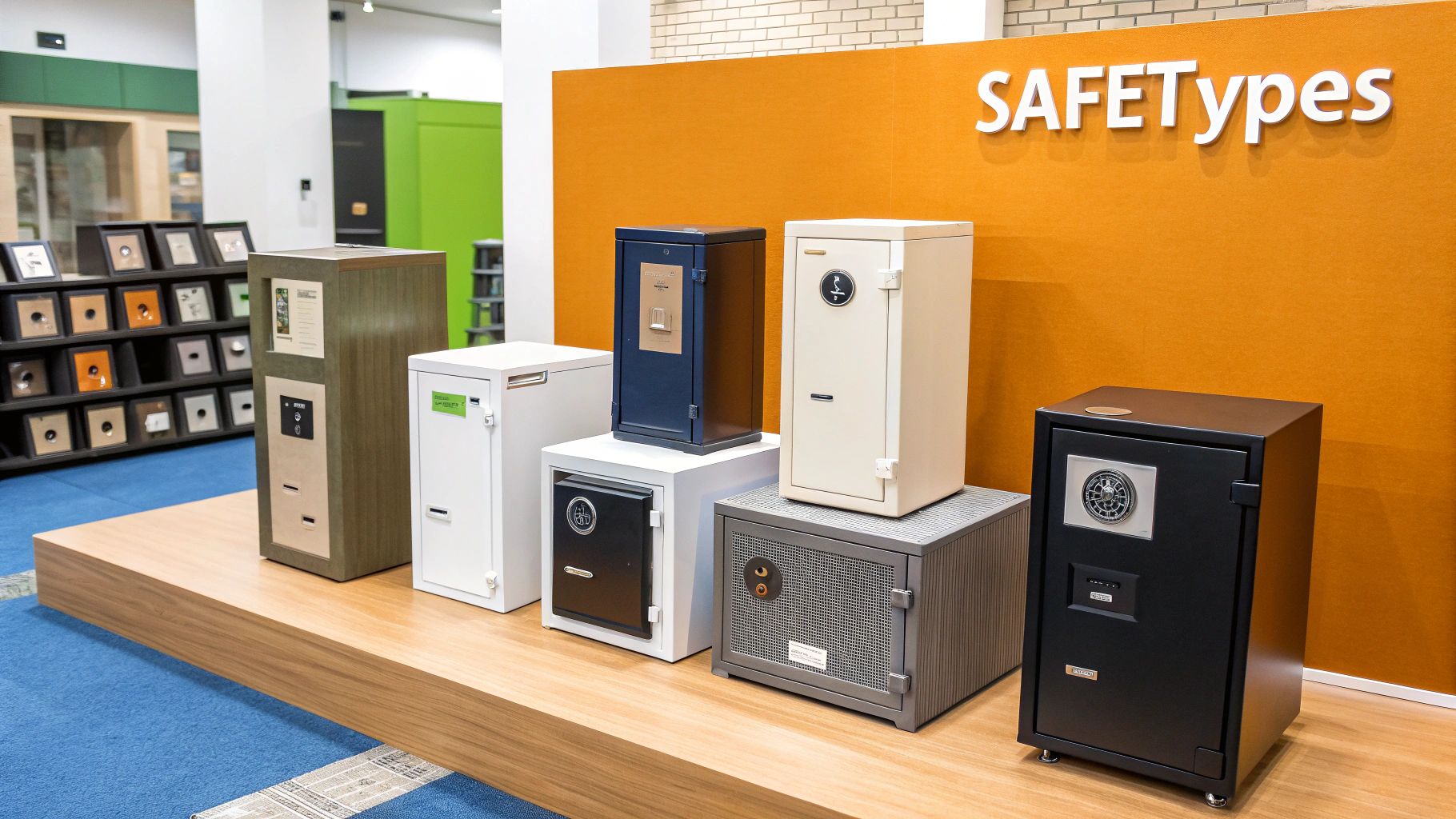
Before you even think about picking up the phone, your hunt for a skilled safe locksmith starts right here, online. The goal isn't just to find any locksmith, but to build a shortlist of genuine, qualified professionals in the Greater Toronto Area. This initial groundwork is crucial for filtering out the unqualified operators right from the get-go.
A truly professional outfit will have a verifiable, physical address—not just a P.O. Box or a vague "serving the GTA" tagline. Look for a proper business website that goes into detail about their specific safe services, not some generic, one-page template. This transparency is a big first sign you're dealing with a legitimate company, and it’s just as vital for workshop services as it is when you need to find a mobile locksmith in Markham for instant response.
Sifting Through Online Reviews
With a few potential candidates in mind, it's time to dig into their reputation. Head over to Google, Yelp, and HomeStars, but don't just glance at the star rating. You need to read the actual stories people are sharing. What you're looking for are detailed reviews that talk about specific safe-related jobs.
Be cautious of a sudden burst of 5-star ratings all at once or reviews that just say, "Great service!" Those are easy to fake. Authentic feedback usually gets specific and often mentions things like:
- The brand or type of safe (e.g., Sentry, AMSEC, a gun safe).
- The exact problem they faced (lost combination, malfunctioning keypad, jammed bolt).
- Details about the technician's approach and professionalism.
A review that says, "The locksmith managed to open my grandfather's old dial safe without any drilling and even serviced the mechanism afterwards," tells you a lot more about their skill than a simple thumbs-up. That's the kind of credibility you're looking for.
Finally, do a quick check for credentials. A locksmith affiliated with a recognized body like The Association of Ontario Locksmiths shows they're committed to professional ethics and industry standards. It's a simple step that can help you confidently separate the true safe experts from the pretenders.
Crucial Questions to Ask Before You Hire
Once you've got a shortlist of potential safe locksmiths, it's time to pick up the phone. This conversation is your single most important vetting tool. You're trying to figure out if you're talking to a genuine expert or just someone with a drill and a van.
A real pro will be happy to answer detailed questions—they're proud of their expertise. Someone who's underqualified, on the other hand, will likely get defensive or vague.
Before you even mention price, start by feeling out their knowledge. Don't ask a generic question like, "Can you open my safe?" That's a simple yes/no. Instead, get specific.
Try something like, "I have a Sentry safe and the keypad just stopped working. What would your approach be to open it without destroying it?" A skilled technician will walk you through a logical diagnostic process. If they just say "I'll have to drill it," that's a major warning sign.
This image gives you a glimpse into the complex mechanisms they're dealing with. It's not just about turning a lock.
Understanding what's happening inside the safe door makes it clear why a specialist's methodical approach is so important.
Verifying Their Methods and Legitimacy
Next, you need to dig into how they actually work. The most critical question you can ask is, "What are your go-to methods for non-destructive entry?"
You're listening for words like manipulation (feeling the lock's tumblers to find the combination) or using a borescope (a tiny camera) to see inside the lock mechanism. If their first and only suggestion is drilling, thank them for their time and hang up. Drilling is the last resort for a true safe technician, not the first plan of attack.
Once you have a feel for their technical skills, shift to their business credentials. Here are the absolute must-ask questions:
- Are you insured and bonded? This isn't optional. It's your protection if something goes wrong and your property is damaged. Any legitimate safe locksmith will have this and should be able to prove it.
- Can you give me a detailed quote before you start? Don't accept a vague estimate. Ask for a breakdown that includes the service call fee, their hourly labour rate, and any potential costs for parts if a repair is needed after it's opened. This simple step helps you avoid the classic bait-and-switch.
A true professional's answers will be clear and confident. They won’t dodge questions about their process or insurance. This transparency is the best sign you've found a trustworthy expert who can solve your problem without creating a bigger, more expensive one. Ask the tough questions and listen carefully—it’s the best way to protect your valuables.
Spotting Red Flags and Avoiding Common Scams
While most safe technicians in the GTA are hardworking pros, the locksmith industry, unfortunately, has its share of scammers. Frankly, knowing their tricks is the best way to protect yourself from a nightmare situation that costs you time, money, and your peace of mind.
One of the most common cons to watch out for is the "$15 service call" bait-and-switch. You'll see an ad online or get a quote over the phone that sounds too good to be true—because it is. Once the person arrives, that tiny service fee balloons into a massive bill padded with outrageous labour rates and vague, hidden charges. Your small lockout just turned into a several-hundred-dollar ordeal.
On-Site Warning Signs
The moment the technician pulls up, your vetting process should kick into high gear. Do they arrive in a beat-up personal car with no company markings? Are they wearing street clothes instead of a uniform? These are major red flags. A legitimate, established business takes pride in its appearance and invests in professional branding.
Pay close attention to their proposed solution. If the first thing out of their mouth is, "We'll have to drill it," you should be very skeptical. For a true safe expert, drilling is the nuclear option—a method of last resort.
A skilled technician will first try less destructive methods, such as:
- Manipulation: Patiently feeling the dial to find the combination by sound and touch.
- Scoped Entry: Using a specialized borescope to peer inside the lock mechanism and bypass it.
Someone pushing to drill right away often lacks the specialized skills for these finer techniques or is simply looking to run up the bill with a destructive, high-cost procedure. Worse yet, some might even suggest taking an angle grinder to it—a guaranteed way to destroy your safe entirely.
Key Takeaway: A professional safe opening involves drilling a precise, small hole that is properly repaired afterward, leaving the safe's security and fire rating intact. A scammer leaves you with a mangled piece of metal and a completely worthless box.
Verifying Their Legitimacy
A qualified professional will have no problem showing you their business license, proof of insurance, or other credentials. If you ask for this information and they get defensive, evasive, or make excuses, that's your cue to send them away.
When you're looking for dependable lock solutions with a locksmith near by me, trust your gut. A transparent, honest professional will welcome your questions. Identifying these red flags before any work begins is the single best way to protect your property and your wallet.
Decoding the Costs of Professional Safe Services
Let's talk about money. Understanding what goes into the price of a professional safe service is key to avoiding sticker shock and knowing you're paying for genuine skill, not just a service call. The final bill isn't a number pulled out of thin air; it’s a direct reflection of the safe's complexity, the tools required, and the technician's time and expertise.
A few key things drive the cost. First and foremost is the safe itself. Opening a basic residential fire safe is a world away from cracking a high-security commercial safe that boasts a serious UL burglary or fire rating. These high-end safes are built with sophisticated anti-tampering features that demand specialized knowledge to bypass.
Then there’s the lock. A classic mechanical dial and a modern electronic keypad are two completely different beasts, each with its own unique set of potential problems and solutions.
The Problem Dictates the Price
The specific issue you're facing is probably the biggest factor in the final cost. A simple lockout due to a forgotten combination is one thing. It's another thing entirely when a bolt is jammed, the internal relocking mechanism has fired, or the digital keypad has fried.
Any reputable safe technician has one primary goal: a non-destructive opening. This preserves the safe and its contents, saving you a fortune in the long run. It takes more skill and often more time, but it's the right way to do it.
Drilling should always be a last resort, not the first move. A true professional drills with surgical precision to bypass the lock and can then repair the safe, restoring its security. An amateur with a drill can turn a $5,000 safe into a useless metal box, leaving you with a huge replacement bill and a disposal nightmare.
Understanding these factors helps you make sense of the quotes you receive. For a broader look at pricing, our guide on how much locksmiths charge offers a great starting point for various services. Having this insight empowers you to confidently invest in a qualified GTA technician who will protect your valuables, not just break into them.
Your Top Safe Locksmith Questions, Answered
When you're locked out of your own safe, it's natural to have a lot of questions. We get it. Here are the answers to some of the most common things we're asked, straight from our team of experienced technicians.
Can a locksmith change the combination on my mechanical safe?
Yes, absolutely. Any truly qualified safe technician can reset the combination on a standard mechanical dial lock. In fact, we recommend it.
Think about it: if you've just inherited a safe, had an employee with the code leave the company, or just can't shake the feeling that someone else might know the combination, changing it is the only way to guarantee you’re the only one with access. It's a routine part of securing your valuables.
If you have to drill my safe, will it be ruined?
This is a huge concern for people, and for good reason. The short answer is: not if a professional does it.
A skilled safe tech doesn't just take a power drill to your safe and hope for the best. We use specialized equipment to drill a single, tiny hole—often only a few millimetres wide—at a very precise point to manipulate the lock. Afterwards, that small opening is properly repaired with a hardened steel pin, which brings the safe right back to its original security and fire-rating standards. An amateur, on the other hand, can easily destroy it.
It's the difference between surgery and demolition. A pro uses precision to solve the problem while preserving the asset; an unqualified person leaves you with a useless, mangled box.
Is it cheaper just to buy a new safe instead of opening the old one?
For those really cheap, low-end safes you might find at a big-box store? Maybe. But for any decent quality fire safe, burglary safe, or gun safe, a professional opening and repair is almost always more cost-effective.
Remember, you aren't just comparing the repair bill to the price tag of a new safe. You also have to factor in the cost and sheer hassle of having the old, heavy safe removed and then getting a new one delivered and installed. It adds up quickly.
When your valuables are on the line, don’t settle for anything less than a certified expert. For reliable, professional safe opening and repair services across the GTA, trust My Locksmiths. Contact us today for a transparent quote and fast, skilled assistance.
