






Did you know that nearly 30 percent of people misplace or lose a key each year? A lost or damaged key can disrupt your entire day, especially if you rely on specialized types like smart keys or transponders. Recognizing the unique characteristics of your key and understanding the replacement process reduces stress and saves time. This guide offers clear steps and practical tips to keep your property secure and get you back on track quickly.
Table of Contents
- Step 1: Identify Your Key Type And Replacement Needs
- Step 2: Gather Essential Information And Documents
- Step 3: Contact A Local Locksmith For Replacement
- Step 4: Confirm Technician Credentials And Pricing
- Step 5: Test And Verify Your New Replacement Key
Quick Summary
| Key Point | Explanation |
|---|---|
| 1. Identify your key type and needs | Understand the specific type of key you have to ensure appropriate replacement methods. |
| 2. Gather essential documentation | Collect ownership proof and vehicle details for a smoother replacement process. |
| 3. Contact a reputable locksmith | Research licensed locksmiths based on your key type and reach out for assistance. |
| 4. Verify locksmith credentials and pricing | Ensure the locksmith provides proof of credentials and clear pricing without hidden fees. |
| 5. Test the new key thoroughly | Check the key’s functionality before completing the transaction to avoid future issues. |
Step 1: Identify Your Key Type and Replacement Needs
Identifying your specific key type is the first critical step toward successful key replacement. According to foundational locksmith research, understanding the mechanics and characteristics of your key will help you navigate the replacement process more effectively.
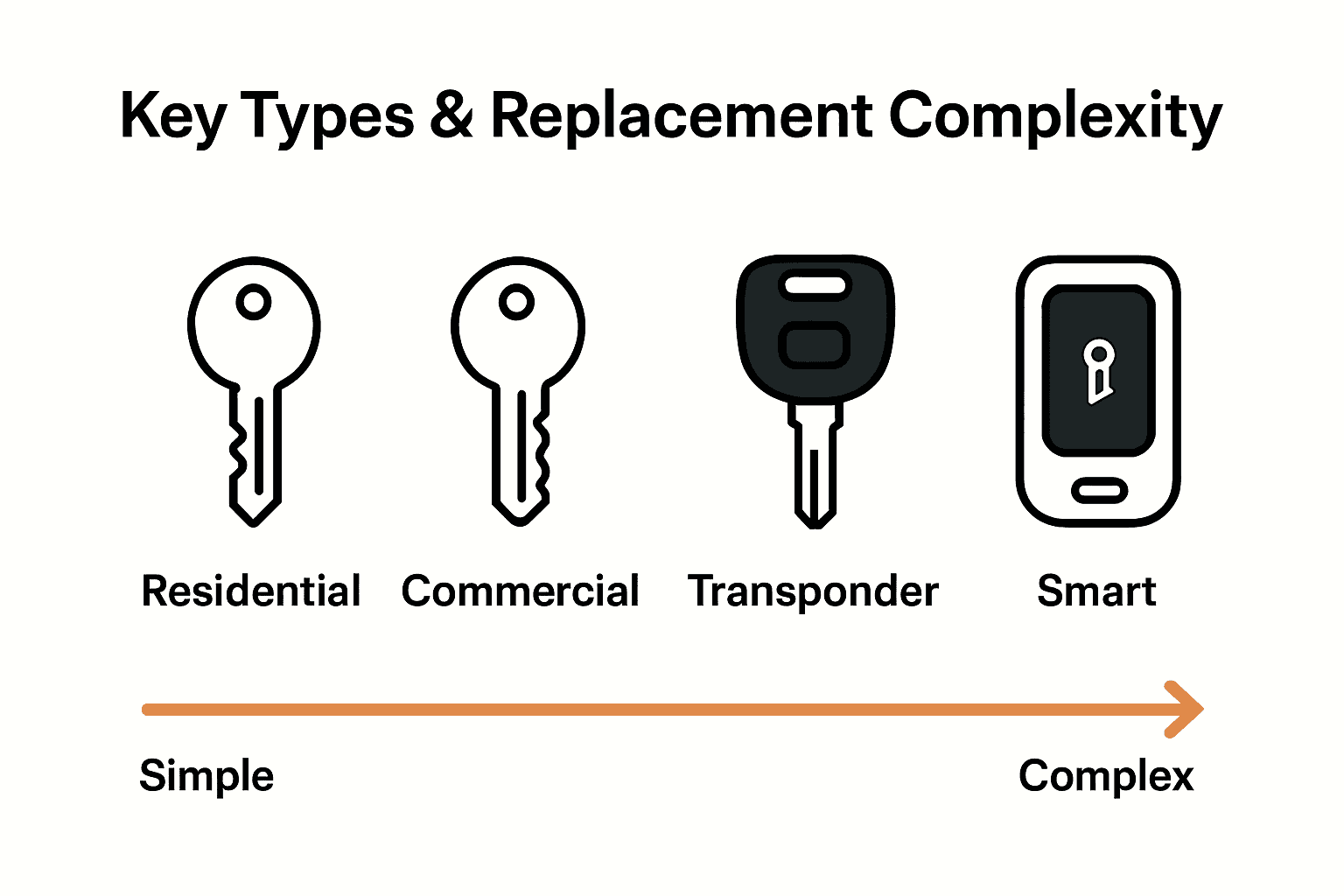
Start by examining the physical structure of your key. Keys generally fall into four primary categories residential keys, commercial keys, automotive keys, and specialized security keys. Each type requires a different approach for replication or replacement. For residential keys like Yale or Union style keys, look closely at the key bow (the wider part you hold) and note its shape and any identifying markings.
Here’s a comparison of common key types and their replacement considerations:
| Key Type | Identification Features | Replacement Complexity | Special Requirements |
|---|---|---|---|
| Residential Key | Bow shape Stamp markings | Low | None |
| Commercial Key | Complex profile System codes | Moderate to High | Work authorization |
| Automotive Metal Key | Metal blade Car logo | Low | VIN recommended |
| Automotive Transponder | Plastic head Chip inside | High | Electronic programming VIN |
| Smart Key/Fob | No blade Buttons LED | Very High | Programming Proof of ownership |
| High-Security Key | Restricted cuts Serial number | Very High | Written permission Special tools |
For automotive keys, pay special attention to whether you have a traditional metal key, a transponder key, or a modern smart key with electronic programming. These differences significantly impact the replacement process.
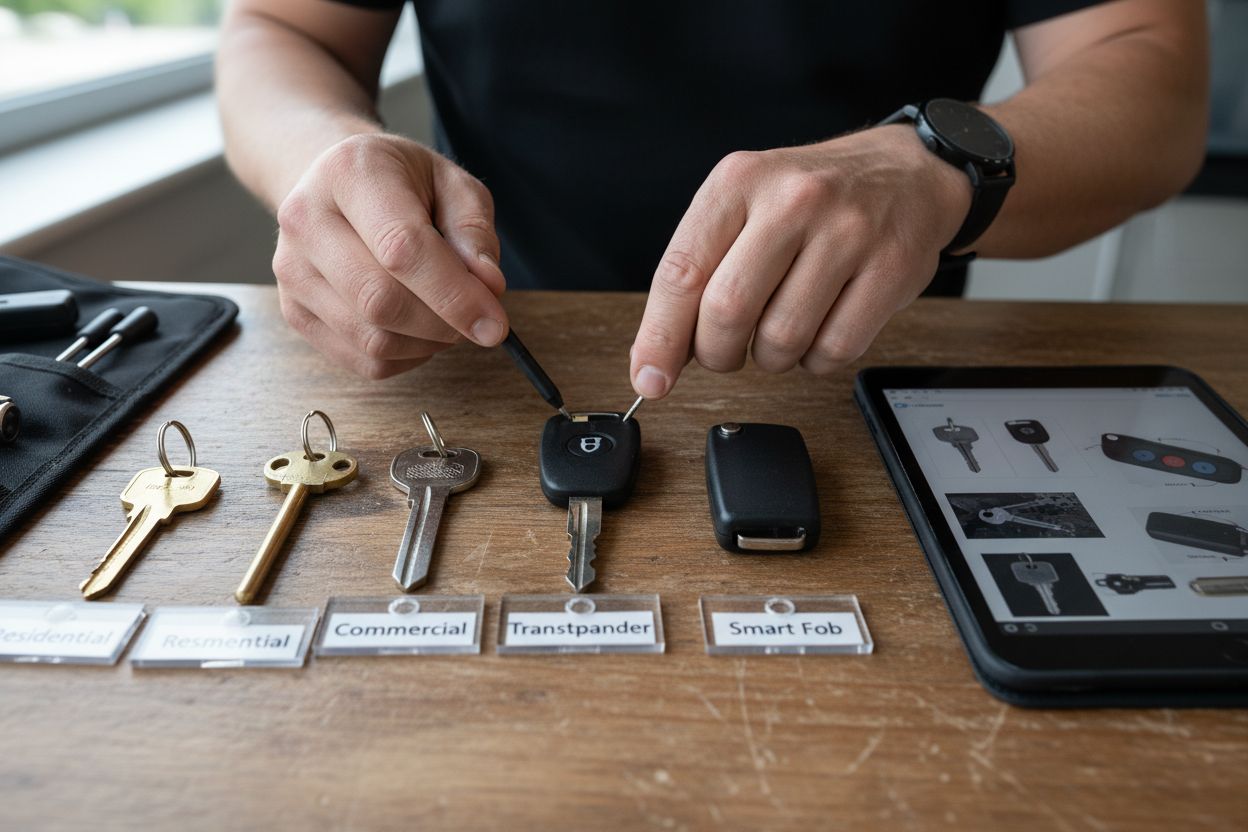 A standard metal car key can often be duplicated quickly, while a transponder key requires specialized electronic synchronization with your vehicle.
Pro Tip: Always take a clear photograph of your key from multiple angles before losing or damaging it. This visual documentation can help locksmiths accurately identify and reproduce your key.
Commercial and high-security keys often have more complex profiles and might include master key systems that require specialized knowledge. If you cannot immediately identify your key type, consider consulting a professional locksmith who can provide expert identification and guidance.
In our guide on rekeying vs replacing locks, we provide additional context about matching key types with appropriate security solutions. The next step is gathering the specific details that will help your locksmith create an accurate replacement.
Step 2: Gather Essential Information and Documents
After identifying your key type, the next crucial phase is collecting all necessary documentation and details for a smooth key replacement process. This step ensures you have everything a locksmith needs to create an accurate and functional replacement.
Start by collecting proof of ownership for the property or vehicle associated with the key. This might include vehicle registration documents, property deed, lease agreement, or government identification that confirms your connection to the key system. According to official key request documentation standards, having clear identification is paramount for authorization.
For automotive keys, gather your vehicle identification number (VIN), make, model, and year. These specifics are critical for programming electronic or transponder keys. If you have a spare key or the original key documentation, bring those as well. These documents can provide additional verification and technical details that help locksmiths reproduce your key precisely.
Pro Tip: Create a quick digital folder on your phone or computer with scanned copies of all relevant documents. This backup ensures you always have important information readily accessible.
If you are replacing a commercial or high-security key, you might need additional documentation such as work authorization, company identification, or written permission from the property manager. Some secure facilities require multi-level verification before key replacement.
In our lost car key replacement guide, we provide more detailed insights into the documentation process for different vehicle key types.
Preparing these materials in advance will significantly streamline your key replacement experience and reduce potential delays.
Step 3: Contact a Local Locksmith for Replacement
Reaching out to a professional locksmith is the final critical step in your key replacement journey. According to the Locksmiths Guild’s Code of Practice, choosing a reputable local locksmith ensures not just key reproduction but also maintains rigorous security standards.
Start by researching licensed locksmiths in your area with proven expertise in your specific key type. Look for professionals who specialize in automotive, residential, or commercial key replacements depending on your needs. When making initial contact, be prepared to provide the detailed information and documentation you gathered in previous steps.
During your initial consultation, clearly describe your key replacement requirements. Professional locksmiths will ask specific questions about your key type, verify your ownership documentation, and outline the exact replacement process. They may request additional details about your vehicle, property, or security system to ensure precise key reproduction.
Pro Tip: Always request a clear price quote upfront and ask about warranties or guarantees for the replacement key. Reputable locksmiths will be transparent about their pricing and service commitments.
According to professional locksmith protocols, technicians must verify identities and follow secure handling procedures. This means you will likely need to provide government identification and proof of ownership during the replacement process.
In our guide to understanding local locksmith services, we provide additional insights into selecting the right professional for your specific key replacement needs. The next step involves working closely with your chosen locksmith to complete the key reproduction process.
Step 4: Confirm Technician Credentials and Pricing
Verifying the professional credentials and understanding the pricing structure are essential steps in ensuring a reliable and transparent key replacement experience. According to the ALOA Security Professionals Association, legitimate locksmiths should be able to demonstrate clear professional certifications and industry affiliations.
Start by requesting proof of professional credentials. Reputable locksmiths will have certifications from recognized organizations like the ALOA or state licensing boards. Ask to see their professional identification, business license, and any specialized training certificates relevant to your specific key replacement needs. These documents validate their expertise and commitment to professional standards.
When discussing pricing, request a comprehensive quote that breaks down all potential costs. This should include key cutting fees, programming charges for electronic keys, service call rates, and any additional expenses. Professional locksmiths following ethical practice guidelines will provide transparent pricing without hidden charges.
Pro Tip: Compare quotes from multiple licensed locksmiths to ensure you are receiving fair market pricing while maintaining high service quality.
According to the Locksmiths Guild of Australia’s Code of Practice, technicians must maintain detailed service records and follow strict identity verification protocols. This means they should be willing to explain their pricing structure and provide a clear written estimate before beginning work.
In our how to replace lost car keys guide, we offer additional insights into navigating the technical and financial aspects of key replacement. Be prepared to ask questions and ensure you feel completely comfortable with the proposed service before proceeding.
Step 5: Test and Verify Your New Replacement Key
Testing and verifying your newly created replacement key is a critical final step in ensuring complete functionality and security. According to comprehensive key management guidelines, thorough verification prevents potential future lockout scenarios and confirms the precision of the key reproduction process.
Begin by testing the physical key mechanism. Insert the new key into the lock and check for smooth insertion without resistance. Rotate the key completely through its full range of motion multiple times to confirm proper alignment and mechanical compatibility. Pay special attention to how the key interacts with the lock cylinder ensuring no binding or unusual friction occurs during rotation.
For electronic or transponder keys, the testing process becomes more complex. You will need to verify electronic synchronization with your specific vehicle or security system. This typically involves multiple programming steps such as entering specific key sequences or using manufacturer recommended programming protocols.
Pro Tip: Ask your locksmith to demonstrate the key functioning successfully before completing the transaction. Reputable professionals will gladly walk you through a comprehensive verification process.
According to key management documentation, maintaining a formal record of your key replacement including serial numbers, cutting specifications, and verification timestamps provides an important documentation trail. This becomes especially critical for commercial or high security environments.
In our car key programming guide, we provide additional technical insights into testing electronic key systems. If any issues arise during testing, immediately contact your locksmith to address potential refinements or adjustments.
Fast and Reliable Key Replacement Solutions You Can Trust
Losing or damaging a key can feel frustrating and stressful, especially when you need quick access to your home, business, or vehicle. This guide highlights important challenges like identifying your key type, gathering proper documentation, and finding a skilled locksmith who offers transparent pricing and professional credentials. At My Locksmiths, we understand the urgency of your situation and provide fast, affordable key replacement services tailored for residential, commercial, and automotive needs across the Greater Toronto Area.

Don’t let a lost or broken key slow you down. Connect now with licensed locksmith technicians who prioritize your security and satisfaction. Whether you need a simple metal key duplicate or an advanced electronic key programming, visit our Uncategorized – My Locksmiths page to learn more. For immediate assistance or to schedule a key replacement service, start here at My Locksmiths. Act today and regain peace of mind with quick, expert help you can count on.
Frequently Asked Questions
What is the first step in the locksmith replacement key process?
Identifying your key type is the first critical step. Examine the physical structure of your key and take note of its characteristics, such as the shape of the bow or any markings.
How do I gather essential information needed for key replacement?
Collect proof of ownership associated with the key, such as vehicle registration, property deed, or identification. Organize these documents in a digital folder for easy access when you contact a locksmith.
What should I do to ensure I choose a reputable locksmith?
Research licensed locksmiths in your area and verify their credentials before contacting them. Always ask for proof of their professional certifications and business licenses when you speak with a potential locksmith.
How can I verify the pricing and services before getting a new key?
Request a comprehensive quote that outlines all potential costs associated with the key replacement, including cutting and programming fees. Compare quotes from different locksmiths to ensure a fair price.
How do I test my new replacement key after receiving it?
Insert the new key into the lock and turn it to verify that it works smoothly without resistance. Test it multiple times to ensure proper alignment and mechanical compatibility before finalizing the transaction.
What if my electronic or transponder key isn’t working properly?
If your new key does not function as expected, return to the locksmith immediately to address the issue. Promptly discussing the problem allows them to make necessary adjustments or refinements.
