


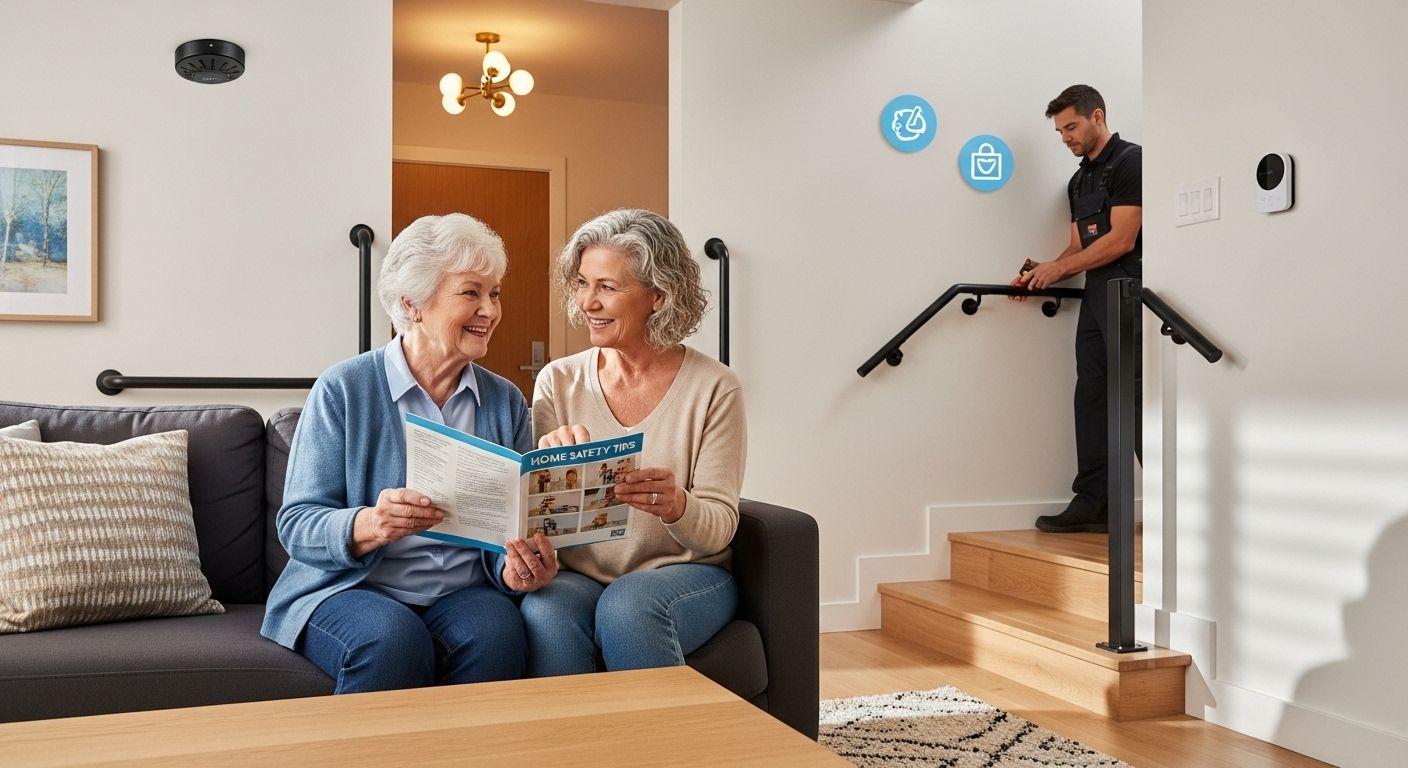
Keeping seniors safe at home just got a lot more urgent. About one-third of adults over 65 have a fall each year, and those falls are the leading cause of injury among older adults. Most people think tripping hazards like rugs are the big issue. Surprisingly, simple updates like better lighting or a single grab bar can actually cut those risks in half. What often gets missed is that a few strategic changes can help seniors stay confident and independent right where they are.
Table of Contents
- Conduct A Home Safety Assessment
- Improve Lighting In Key Areas
- Remove Trip Hazards
- Install Handrails And Grab Bars
- Use Smart Home Technology
- Create An Emergency Plan
- Secure Your Home’s Entry Points
- Regularly Check And Update Safety Equipment
Quick Summary
| Takeaway | Explanation |
|---|---|
| Conduct Regular Home Assessments | Evaluate your home at least twice a year to identify safety risks for seniors. |
| Improve Lighting in Key Areas | Increase light in stairways, hallways, and bathrooms to enhance visibility. |
| Remove Trip Hazards | Eliminate loose rugs and clutter to reduce fall risks for seniors. |
| Install Handrails and Grab Bars | Place these supports in critical areas to aid mobility and prevent falls. |
| Create an Emergency Plan | Develop a structured response plan for medical or safety emergencies. |
1: Conduct a Home Safety Assessment
Creating a comprehensive home safety assessment is the foundational step in protecting seniors from potential hazards and ensuring a secure living environment. By methodically examining the home’s layout, potential risks, and accessibility challenges, families can proactively mitigate accidents and enhance overall senior safety.
A thorough home safety assessment involves carefully evaluating multiple areas of the living space. Seniors and their caregivers should systematically review key spaces like bathrooms, staircases, hallways, and living areas to identify potential fall risks, mobility challenges, and environmental obstacles.
The assessment should focus on several critical elements:
Identifying and removing tripping hazards like loose rugs, electrical cords, and cluttered walkways
Checking lighting adequacy in all rooms, especially during nighttime navigation
Evaluating bathroom safety with potential modifications like grab bars, non-slip mats, and raised toilet seats
Assessing staircase safety with secure handrails, well-maintained steps, and adequate lighting
According to National Institute on Aging, approximately one-third of seniors over 65 experience falls annually, making preventative assessments crucial. These evaluations are not just about identifying risks but creating a proactive safety strategy that maintains the senior’s independence and confidence.
Professional home safety experts recommend conducting these assessments at least twice a year or whenever significant changes in mobility or health occur. Involving the senior in this process ensures their comfort, addresses their specific needs, and helps them feel empowered in their own living space.
For seniors wanting additional security, read our guide on home lockout prevention which offers complementary strategies for maintaining a secure home environment.
2: Improve Lighting in Key Areas
Lighting plays a critical role in home safety for seniors, directly impacting visibility, navigation, and accident prevention. Inadequate illumination can transform ordinary spaces into potential hazard zones, making strategic lighting improvements an essential aspect of senior home safety.
Seniors often experience age-related vision changes that make proper lighting even more crucial. Reduced pupil size and decreased light transmission mean seniors require significantly more ambient light to see clearly compared to younger individuals. This reduced visual acuity increases the risk of missteps, trips, and falls.
Key areas requiring specific lighting attention include:
Stairways and hallways with bright, evenly distributed overhead or wall-mounted lights
Bathrooms with shadow-free illumination around mirrors and shower areas
Kitchen workspaces with under-cabinet lighting to eliminate dark corners
Bedrooms with nightlights for safe nighttime movement
According to National Institute on Aging, older adults need approximately three times more light to see effectively compared to younger people. LED lights offer excellent solutions, providing bright, energy-efficient illumination with minimal heat generation and long-lasting performance.
Additional lighting strategies include installing motion-sensor lights in high-traffic areas, using dimmer switches for adjustable brightness, and positioning task lighting near reading areas or workspaces. These modifications not only enhance safety but also support seniors’ independence and confidence in navigating their home environment.
Consider consulting a professional electrician to evaluate and implement optimal lighting solutions tailored to a senior’s specific needs and home layout. Learn more about home security upgrades that can complement these lighting improvements and further enhance overall home safety.
3: Remove Trip Hazards
Trip hazards represent one of the most significant risks for seniors, transforming seemingly harmless home environments into potential danger zones. Falls can result in serious injuries, making proactive hazard removal a critical component of home safety for older adults.
Seniors experience reduced balance, slower reflexes, and diminished depth perception, which amplify the risks associated with common household obstacles. Loose rugs, electrical cords, cluttered walkways, and uneven flooring can quickly become life-altering threats.
Key areas to systematically address for trip hazard removal include:
Securing or removing loose area rugs with non-slip backing
Organizing electrical cords and cables away from walking paths
Clearing hallways and common areas of furniture that interrupts smooth walking routes
Repairing uneven flooring, worn carpet edges, or raised thresholds
According to Centers for Disease Control and Prevention, one out of four seniors falls each year, with falling once doubling the likelihood of future falls. This statistic underscores the importance of a meticulous approach to eliminating potential tripping risks.
Beyond physical modifications, consider assistive devices like walking aids and mobility supports that can provide additional stability. Grab bars, handrails, and strategically placed furniture can offer seniors extra points of contact and confidence while moving through their living spaces.
Regular home assessments are crucial. What seems insignificant today could become a serious hazard tomorrow. Involve family members or professional home safety consultants to conduct thorough evaluations and implement necessary modifications.
Our guide on home lockout prevention offers additional insights into creating a secure and navigable home environment for seniors.
4: Install Handrails and Grab Bars
Handrails and grab bars represent critical safety interventions that provide seniors with crucial physical support and stability throughout their living spaces. These simple yet effective installations can dramatically reduce fall risks and help maintain independence for older adults navigating potentially challenging home environments.
Strategic placement of handrails and grab bars transforms vulnerable areas into safer, more navigable spaces. The most critical locations for these safety supports include:
Bathrooms, particularly near toilets and inside shower/bathtub areas
Stairways on both sides of the stairs
Hallways with longer walking distances
Bedroom and transition areas between rooms
The physical design of these support structures matters significantly. Proper installation requires considering weight capacity, secure mounting, and ergonomic positioning that allows seniors to maintain natural movement patterns while providing reliable support.
According to National Institute on Aging, handrails and grab bars can reduce fall risks by up to 50% in high-risk areas like bathrooms. These supportive devices not only prevent potential injuries but also boost seniors’ confidence in moving around their homes independently.
When selecting and installing handrails, consider factors like diameter, texture, and mounting height. Textured, slightly thicker bars with a diameter between 1.25 to 1.5 inches provide the best grip. Stainless steel or powder-coated metal options offer durability and aesthetic flexibility.
Professional installation ensures maximum safety and reliability. Improperly mounted bars can become dangerous if they cannot support a senior’s full weight during a moment of imbalance. Learn more about professional installation techniques to understand the precision required for effective safety modifications.
Beyond physical support, these installations communicate a profound message of care, helping seniors feel secure and valued in their living spaces.
5: Use Smart Home Technology
Smart home technology offers transformative safety solutions for seniors, bridging technological innovation with personal security and independence. These advanced systems provide unprecedented monitoring, assistance, and emergency response capabilities that can significantly enhance home safety for older adults.
Modern smart home technologies deliver comprehensive protection through interconnected devices designed to support seniors’ unique needs. The most impactful technological interventions include:
Motion sensors that detect unusual activity or potential falls
Voice-activated emergency call systems
Automated lighting and temperature controls
Video monitoring with remote family access
Wearable emergency response devices represent a critical advancement, allowing seniors to instantly signal for help with a simple button press. These devices can detect falls automatically, immediately alerting designated emergency contacts or medical services when unexpected movement patterns are identified.
According to AARP Technology Survey, approximately 73% of seniors prefer aging in place, and smart home technologies make this preference safer and more feasible. The ability to maintain independence while having robust technological support provides peace of mind for both seniors and their families.
Security considerations remain paramount when implementing smart home systems. Cybersecurity and privacy protections must be carefully evaluated to prevent unauthorized access or data breaches. Seniors and their families should work with reputable technology providers who prioritize user data protection.
Learn more about secure smart lock technologies that can integrate seamlessly with comprehensive home safety strategies. These innovative solutions represent more than technological upgrades they are powerful tools for maintaining senior autonomy and well-being.
6: Create an Emergency Plan
Creating a comprehensive emergency plan is crucial for senior safety, transforming potential crisis situations into manageable scenarios with clear, predetermined responses. An effective emergency plan provides seniors and their families a structured approach to handling unexpected medical, environmental, or personal safety challenges.
A robust emergency plan requires careful preparation and strategic thinking, addressing multiple potential scenarios with clear protocols. Seniors should develop a plan that covers various potential emergencies:
Medical emergencies with contact information for doctors and hospitals
Family and caregiver communication protocols
Evacuation strategies for home and neighborhood
Essential medication and medical equipment backup plans
Communication channels and contact lists form the backbone of any effective emergency strategy. This includes creating a comprehensive document with phone numbers, addresses, and specific instructions for family members, healthcare providers, neighbors, and emergency services.
According to Centers for Disease Control and Prevention, seniors are more vulnerable during emergencies and require specialized preparation. The plan should account for potential mobility limitations, medication dependencies, and unique health considerations.
Technology can significantly enhance emergency preparedness. Modern communication tools and medical alert systems provide seniors with immediate access to help. Smartphones, emergency response devices, and digital medical records can be lifelines during critical moments.
Learn more about preventing home lockouts and additional strategies for maintaining personal safety. Regular plan reviews and updates ensure that emergency protocols remain current and relevant to the senior’s changing needs and circumstances.
7: Secure Your Home’s Entry Points
Protecting home entry points is fundamental to senior safety, creating a robust first line of defense against potential intrusions and unauthorized access. Seniors are often perceived as vulnerable targets, making strategic security measures critical for maintaining personal security and peace of mind.
Effective entry point security involves a comprehensive approach that addresses multiple potential vulnerabilities. Key strategies include:
Installing high-quality deadbolt locks on all exterior doors
Reinforcing door frames and hinges
Adding peepholes or security cameras
Ensuring windows have secure, functioning locks
Exterior lighting plays a crucial role in deterring potential intruders. Motion-activated lights around entry points can significantly reduce the likelihood of unauthorized approaches, making seniors’ homes less attractive targets for criminal activity.
According to National Crime Prevention Council, proper door and window security can reduce home break-in risks by up to 60%. This statistic underscores the importance of investing time and resources into comprehensive entry point protection.
Technology offers additional layers of security. Smart locks with temporary access codes, video doorbells, and integrated alarm systems provide seniors with enhanced monitoring and control over their home’s entry points. These technologies allow for remote access management and real-time alerts, giving seniors and their families added peace of mind.
Learn more about door frame reinforcement techniques that can provide an extra layer of protection. By implementing these strategic security measures, seniors can create a safer, more secure living environment that supports their independence and well-being.
8: Regularly Check and Update Safety Equipment
Maintaining and updating safety equipment is a critical aspect of home protection for seniors, ensuring that critical protective devices remain fully functional and ready to respond during emergencies. Regular equipment checks can mean the difference between a manageable situation and a potentially life-threatening scenario.
A comprehensive safety equipment maintenance strategy should encompass multiple protective systems and devices:
Checking smoke and carbon monoxide detector batteries every six months
Testing emergency alert systems and medical response devices quarterly
Inspecting fire extinguishers for proper pressure and accessibility
Reviewing and updating first aid kit contents annually
Systematic equipment maintenance requires establishing a consistent schedule and documenting each inspection. Seniors or their caregivers should create a checklist that tracks the condition, battery life, and operational status of all critical safety devices.
According to National Fire Protection Association, approximately 3 out of 5 home fire deaths occur in properties without working smoke alarms, highlighting the paramount importance of regular equipment checks.
Modern safety technologies offer advanced monitoring capabilities. Smart smoke detectors, for instance, can send real-time alerts to smartphones, providing an additional layer of protection and peace of mind for seniors and their families.
Learn more about lockout prevention strategies that complement comprehensive safety equipment maintenance. By remaining proactive and vigilant, seniors can create a safer living environment that supports their independence and well-being.
Below is a comprehensive table summarizing the eight essential home safety tips for seniors discussed in the article, including their main purposes and key benefits for independent living.
| Safety Tip | Main Purpose | Key Benefits for Seniors |
|---|---|---|
| Conduct Home Safety Assessment | Regularly check home for hazards and accessibility issues | Reduces accident risk, empowers independence |
| Improve Lighting in Key Areas | Increase brightness in crucial areas | Prevents falls, enhances visibility |
| Remove Trip Hazards | Eliminate obstacles and address risky flooring | Reduces falls, creates safer walkways |
| Install Handrails and Grab Bars | Provide physical support and stability | Aids mobility, builds confidence |
| Use Smart Home Technology | Integrate monitoring and emergency systems | Boosts safety, allows aging in place |
| Create an Emergency Plan | Establish protocols for crisis situations | Ensures rapid response, reduces confusion |
| Secure Home’s Entry Points | Enhance door, window, and perimeter protection | Deters intruders, supports overall security |
| Check and Update Safety Equipment | Regularly inspect and maintain safety devices | Ensures equipment functionality, saves lives |
Protect Your Loved Ones with Expert Senior Home Security
Worried about the hidden dangers in your home that could threaten your senior family members’ independence and safety? This article has shown how important it is to conduct home safety assessments, secure entry points, and keep up with the latest security technology. But even the best prevention tips need reliable solutions you can trust. Simple mistakes like a misplaced key or outdated locks can turn a safe haven into a source of anxiety for both seniors and their families.
If you want to keep your home secure and stress-free, let the professionals at My Locksmiths help. Our 24/7 locksmith service keeps seniors protected from lockouts and intrusions. Our team specializes in door frame reinforcement techniques and the installation of secure smart lock technologies that work hand in hand with your smart home improvements. Act now to schedule a home security upgrade, reinforce your home’s entry points, and gain the peace of mind that comes from knowing your loved ones are safe. Visit My Locksmiths today and connect with a licensed technician who understands your needs.
Frequently Asked Questions
What are some common home safety assessment tips for seniors?
A thorough home safety assessment for seniors should include checking for trip hazards, improving lighting, evaluating bathroom and stair safety, and removing clutter. Regularly assessing these areas can help prevent accidents and maintain independence.
How can I improve lighting in my home for a senior?
To improve lighting for seniors, install bright, even lighting in key areas like stairways, bathrooms, and kitchens. Consider using LED lights, motion-sensor lights, and under-cabinet lighting to enhance visibility and safety.
What types of assistive devices can help reduce trip hazards for seniors?
Assistive devices like walking aids, grab bars, and handrails can provide added stability for seniors. Ensuring furniture is arranged to create clear pathways also helps reduce the risk of trips and falls.
How often should safety equipment like smoke detectors be checked and updated?
Safety equipment such as smoke and carbon monoxide detectors should be checked every six months, while medical alert systems should be tested quarterly. Regular maintenance ensures these devices function properly and provide necessary protection.
